
— Evolve Blog
Radon in the Willamette Valley: What Every Homeowner Needs to Know

Author
Chris Simpson
Published
Jan 15, 2026
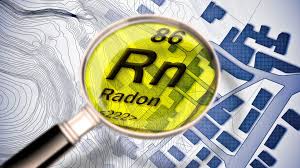
Radon doesn't announce itself. You can't smell it, see it, or taste it. But it's sitting in homes across the Willamette Valley right now, seeping up through the ground and collecting in basements, crawl spaces, and living areas.
I test for radon on nearly every inspection I run, and I can tell you firsthand: the results still surprise people. The Willamette Valley sits in a region where naturally occurring uranium in the soil creates the conditions for elevated radon levels. That doesn't mean every home has a problem — it means you shouldn't assume yours doesn't.
What radon actually is
Radon is a radioactive gas that forms when uranium in soil and rock breaks down. It rises through the ground and can enter a home through foundation cracks, gaps around pipes, and even through concrete itself. Once inside, it has nowhere to go. It accumulates.
The EPA considers any level at or above 4 pCi/L an action level — meaning mitigation is recommended. The national average indoors is about 1.3 pCi/L. I've tested homes here that read well above 4.
Why the Willamette Valley specifically
Oregon soils in the valley contain varying concentrations of uranium-bearing minerals. Add our wet winters, which seal homes up tight and reduce natural ventilation, and you've got conditions that allow radon to build. Homes with crawl spaces can be particularly susceptible, though slab foundations aren't immune.
I've seen elevated readings in newer construction as often as in older homes. Age of the house tells you almost nothing about radon risk.
What the test actually involves
I use a continuous electronic radon monitor during inspections. It records hourly readings over 48 hours and flags any tamper events, which matters for real estate transactions where trust is essential. At the end, you get a clear average and a recommendation based on EPA guidelines.
It's not dramatic — the monitor sits in the lowest livable space, I come back after the inspection window, and we review the results together.
If levels are elevated
Mitigation is usually straightforward. A sub-slab depressurization system — basically a pipe and fan that draws radon out from under the home and vents it outside — can reduce indoor levels by up to 99%. These systems typically run $800–$1,500 installed, and they work. I've never seen a well-installed system fail to bring levels down.
This is not a reason to walk away from a home. It's a reason to get it tested so you know what you're dealing with.
My honest take
If you're buying a home in the Willamette Valley and radon testing isn't part of your inspection, you're leaving a real health variable unknown. The test adds a small cost to the inspection. What it tells you is whether you need to act before you move your family in.
I'm a Certified Radon Measurement Specialist and EPA Certified Radon Measurement Specialist. It's something I take seriously because the health implications are real. If you have questions before scheduling, call me — I'd rather spend five minutes on the phone than have a client find out later they had an easily fixable problem.
— Get In Touch
Ready to Schedule?
Call or Text
(971) 219-0871
Tap to call
inspectorChrisS@gmail.com
Tap to email
Service Area
Portland Metro
Columbia, Multnomah, Clackamas & Washington Counties
Discount
Military Discount
Active duty, veterans & first responders. Mention when scheduling.